How to Add Subtitles in Castle App? (Step-by-Step Guide)
I started using Castle Apk almost a year ago, mostly to catch up on Turkish dramas and a few Korean shows my cousin kept recommending. The problem? Half the dialogue flew right past me. That’s when I actually sat down and figured out the proper way to get subtitles working not the “quick Google fix” version, but the one that actually works every single time, including the sync issues nobody warns you about.
This guide is based entirely on that hands-on experience. No guesswork, no copy-pasted steps from an app store description just what actually happens when you try to load an SRT file at 11 PM and the subtitles refuse to show up.
How to Add Subtitles in Castle App?
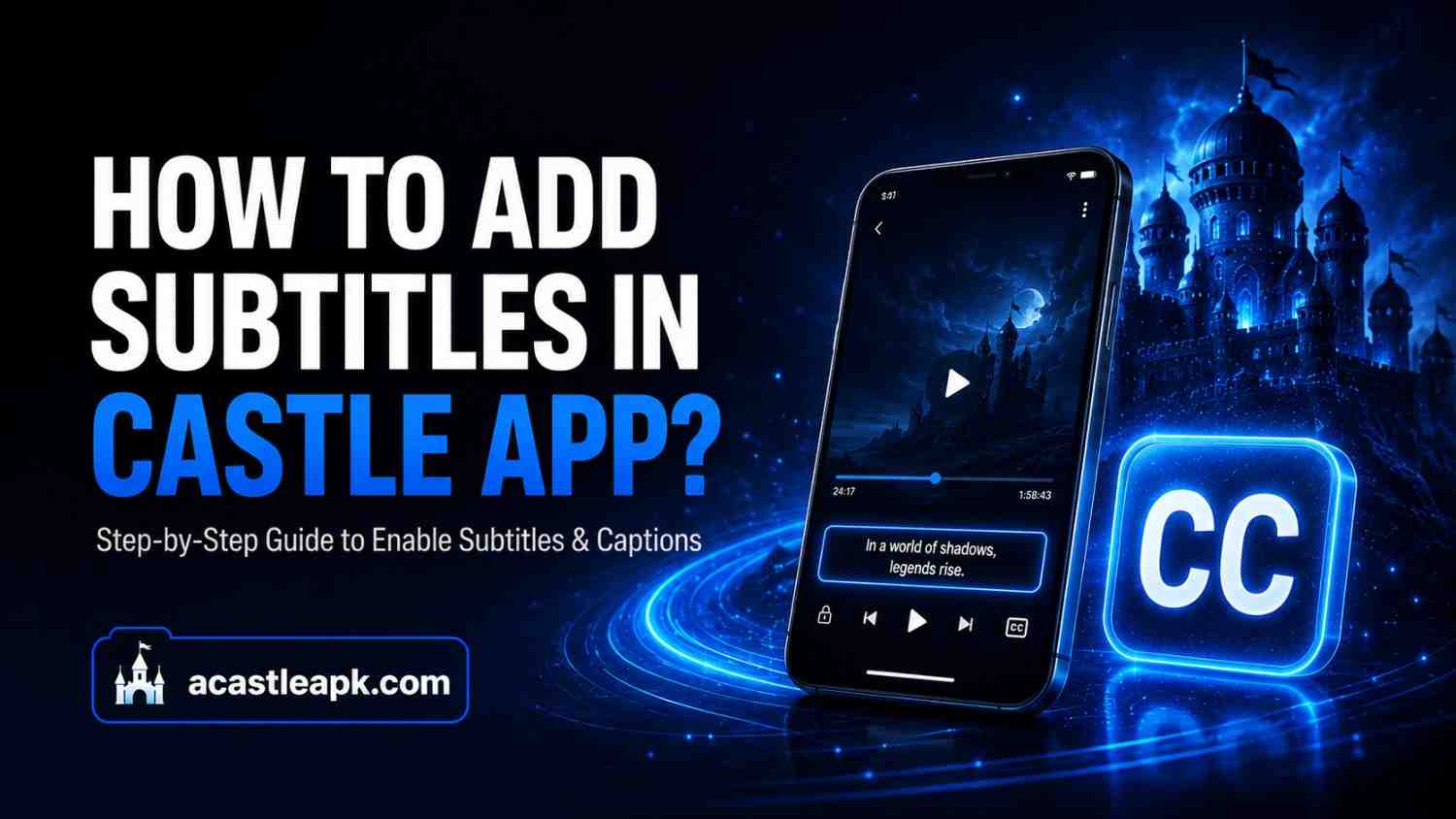
Open Castle App, play your video, tap the three-dot menu or settings icon, select “Subtitles” or “CC,” then load your external SRT or VTT file from storage. Enable it, adjust sync if needed, and customize the font size or color from the same menu.
What Are Subtitles in Castle App?
Subtitles in Castle App are text overlays that display spoken dialogue (and sometimes translated dialogue) on screen while a video plays. They’re either built into the video permanently or loaded separately as an external file that you control.
What Subtitles Do?
In plain terms, subtitles turn spoken words into readable text, synced to match the timing of the dialogue. Once loaded, you get a running transcript at the bottom of your screen, timed to appear and disappear exactly when each line is spoken.
Subtitles vs Captions: What’s the Difference?
People use these terms interchangeably, but they’re not the same thing. Subtitles translate or transcribe spoken dialogue only. Captions go a step further and describe background sounds too things like [door creaks] or [phone rings] which matters a lot for viewers who are deaf or hard of hearing. Castle App primarily supports subtitles, though some external files include limited caption-style sound cues.
Why Adding Subtitles in Castle App? Is Worth It
I’ll be honest I didn’t think subtitles mattered much until I actually tried using them for a month straight. Here’s what changed.
Better Accessibility for Every Viewer
Not everyone processes fast dialogue the same way, and hearing difficulties are more common than most streaming apps account for. With subtitles turned on, nobody in the room misses a plot point, regardless of hearing ability or how fast the actors talk.
Watch Content in Different Languages
This is the big one for me. Spanish thrillers, Japanese anime, French dramas subtitles opened up an entire library of content that used to feel off-limits simply because I don’t speak the original language.
Improve Understanding in Noisy or Quiet Places
I watch a lot of content late at night with the volume low so I don’t wake anyone up. Subtitles mean I don’t have to strain to hear every word I can just read along instead.
Enjoy International Movies and Shows More Easily
Beyond just the language barrier, subtitles carry cultural context that dubbing often loses. Idioms, jokes, and references land better when you’re reading a proper translation instead of a rushed dub.
Subtitle Types Supported in Castle App
Not every subtitle behaves the same way once it’s on your screen. Here’s what I learned after testing all three.
Open (Hardcoded) Subtitles
These are burned directly into the video file itself. You can’t turn them off, move them, or change how they look they’re just part of the footage. You’ll usually see these on older foreign films or fan-subbed content.
Closed (Soft) Subtitles
This is what most people actually mean when this topic comes up. Closed subtitles are separate text files layered over the video, and you can switch them on, off, or between languages whenever you want. I almost always use this option because of the control it gives you.
External Subtitle Files (SRT, ASS, SUB)
These are the actual files you download and load manually. SRT is by far the most common and the most reliably supported format across streaming apps, including Castle App. ASS and SUB files exist too, but they’re less consistent and sometimes need converting before they’ll work properly.
Requirements Before You Get Started
Before jumping into the steps, a few basics saved me a lot of frustration.
Use the Latest Castle App Version
Castle Older versions occasionally have bugs in the subtitle menu, or lack support for certain file formats altogether. Updating the app first rules out half the common problems before they even start.
Download the Correct Subtitle File
Stick to trusted sources Subscene and OpenSubtitles are the two I use most often. Search by the exact movie or show title, and pay attention to the release version listed next to each file.
Make Sure the Subtitle Matches Your Video
This one trips up almost everyone at least once. If your video is a WEB-DL release and you download a subtitle made for a BluRay rip, the timing will be off, sometimes by several seconds. Matching the release version is the single biggest factor in whether your subtitles sync correctly on the first try.
How to Add Subtitles in Castle App? (Step-by-Step)
Here’s the exact process, step by step, the way I actually do it every time.
Step 1: Download the Subtitle File
Head to Subscene or OpenSubtitles, search for your title, and choose your preferred language. Download the file usually a ZIP and extract it to get the SRT file. Save it somewhere easy to find, like a dedicated Subtitles folder on your device.
Step 2: Open Your Video in Castle App
Launch Castle App and start playing the video you want subtitles for. It’s easier to load a subtitle file once playback has already begun, since the subtitle menu is usually accessed from the in-video controls.
Step 3: Import the Subtitle File
While the video is playing, tap the settings icon or three-dot menu in the corner of the screen. Look for “Subtitles” or “CC,” then choose “Add External Subtitles” or “Load Subtitles.” Browse your device storage and select the SRT or VTT file you just downloaded.
Step 4: Sync the Subtitle with the Video
Once loaded, watch the first minute or two to check if the timing lines up. If subtitles appear too early, add a positive delay. If they appear too late, add a negative delay. Most subtitle menus let you adjust this in small increments 100 to 500 milliseconds at a time until it lines up perfectly.
Step 5: Customize Subtitle Appearance
With the subtitle now synced, open the display settings to adjust font size, color, and position so it’s comfortable to read on your screen size and viewing distance.
How to Customize Subtitle Settings?
Getting the subtitle file loaded is only half the job making it comfortable to actually read is what makes the experience worthwhile.
Change Subtitle Size
If you’re watching on a TV or tablet from a few feet away, bump the font size up. On a phone, a smaller size usually keeps the screen from feeling cluttered.
Adjust Font Style and Color
White text works fine on darker scenes, but yellow tends to hold up better against bright backgrounds. A subtle shadow or background box behind the text also makes a noticeable difference in readability.
Modify Subtitle Position
If important visuals sit near the bottom of the frame, move the subtitle text to the top instead so nothing important gets covered.
Switch Subtitle Language
Loading a different language file replaces the current one instantly you don’t need to restart the video. This is especially handy if you’re watching with someone who prefers a different language than you do.
Common Subtitle Problems and Their Solutions
I’ve run into every one of these personally, so here’s what actually fixes them.
Subtitles Not Showing
This almost always comes down to file format. If your subtitle isn’t SRT or VTT, convert it using a free tool like Subtitle Edit before loading it again.
Subtitle Timing Is Incorrect
A mismatched release version is the usual culprit. Re-download a subtitle that matches your exact video source, or manually adjust the sync delay from the subtitle settings menu.
Subtitle File Isn’t Supported
Formats like ASS or SSA sometimes fail to load entirely. Convert them to SRT first, and they should work without issue.
Language Doesn’t Match the Video
Double-check the language tag on the subtitle file before downloading it’s easy to grab the wrong one by mistake, especially when a title has multiple language options listed close together.
Tips for the Best Subtitle Experience in Castle App
- Download subtitles from trusted sources only, like Subscene or OpenSubtitles.
- Always choose subtitles that match your exact video release version.
- Keep Castle App updated to the latest version.
- Use a readable font size and a color that contrasts well with the video.
- Avoid modified or damaged subtitle files, since these are the most common cause of missing lines or crashes.
Pros and Cons of Adding Subtitles in Castle App
Pros
- Makes dialogue easier to follow, even with heavy accents or fast speech
- Opens up international content without a language barrier
- Genuinely useful for anyone learning a new language
- Improves accessibility for viewers with hearing difficulties
- Works well in noisy environments or when the volume needs to stay low
Cons
- Can pull attention away from visuals if you’re reading every line closely
- Poor-quality translations occasionally change the meaning of a scene
- Wrong-version subtitle files cause sync issues until corrected
Frequently Asked Questions
Can I manually load a subtitle file?
Yes. Download an SRT or VTT file, open the subtitle settings while a video is playing, and load the file directly from your device storage.
Which subtitle file format works best in Castle App?
SRT is the most reliable and widely supported format. VTT also works well. Formats like SSA or ASS may need converting to SRT first.
Why are my subtitles out of sync?
This usually happens when the subtitle file doesn’t match your video’s exact release version. Re-download a matching version, or use the built-in delay adjustment to fix the timing manually.
Can I change the subtitle language?
Yes. Download a subtitle file in your preferred language from a trusted source, then load it through the same Subtitles/CC menu no need to restart the video.
Does Castle App support automatic subtitles?
Castle App doesn’t generate subtitles automatically for every title. In most cases, you’ll need to load an external SRT or VTT file yourself, though the app will auto-detect a matching file if it shares the same name as the video and sits in the same folder.
Conclusion
Once you know the process, learning how to add subtitles in Castle App only takes a few minutes download the right file, load it through the subtitle menu, fix the sync if it’s off, and adjust the font to something comfortable to read. The part that actually matters is getting the release version right before you download; that one step avoids nearly every sync problem people run into.
If you’re planning to watch international shows, learning a new language, or just tired of missing half the dialogue, it’s worth setting subtitles up properly the first time. After that, it’s practically automatic every time you hit play.